Technology
UVC Technology. Precisely Applied.
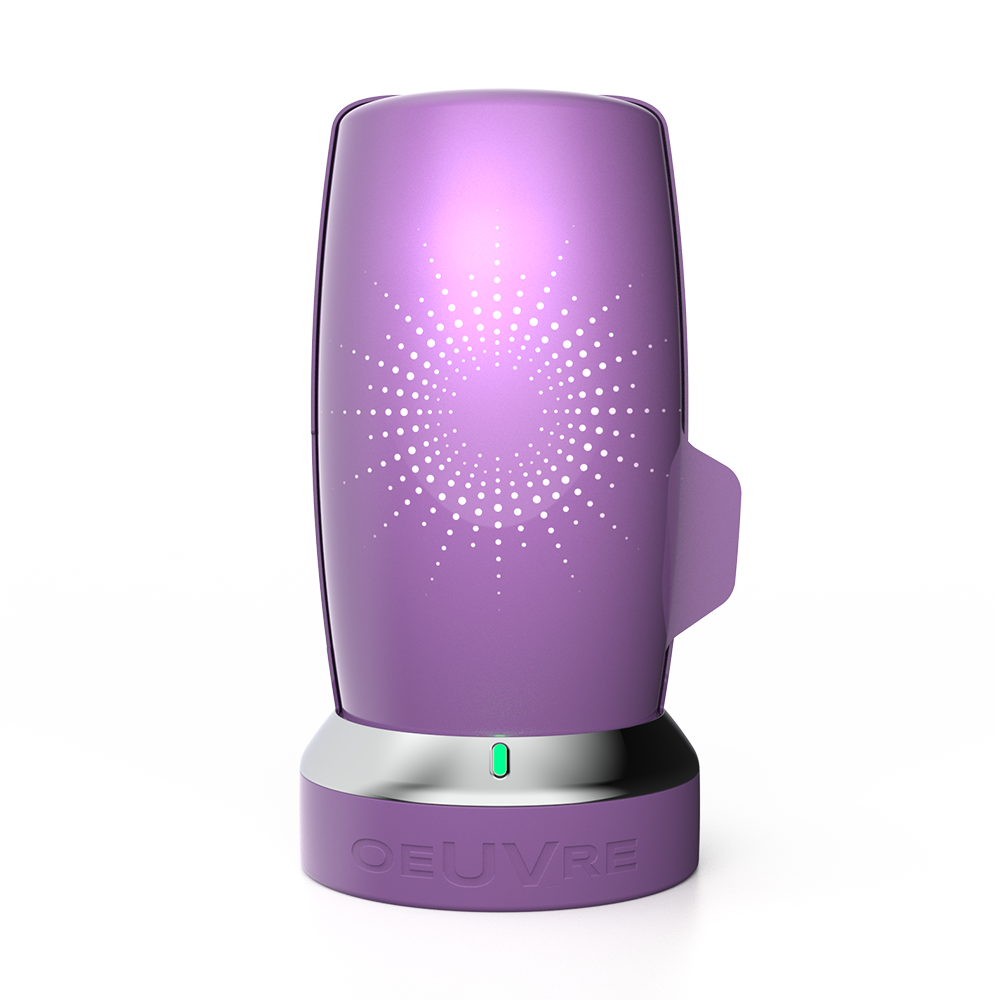
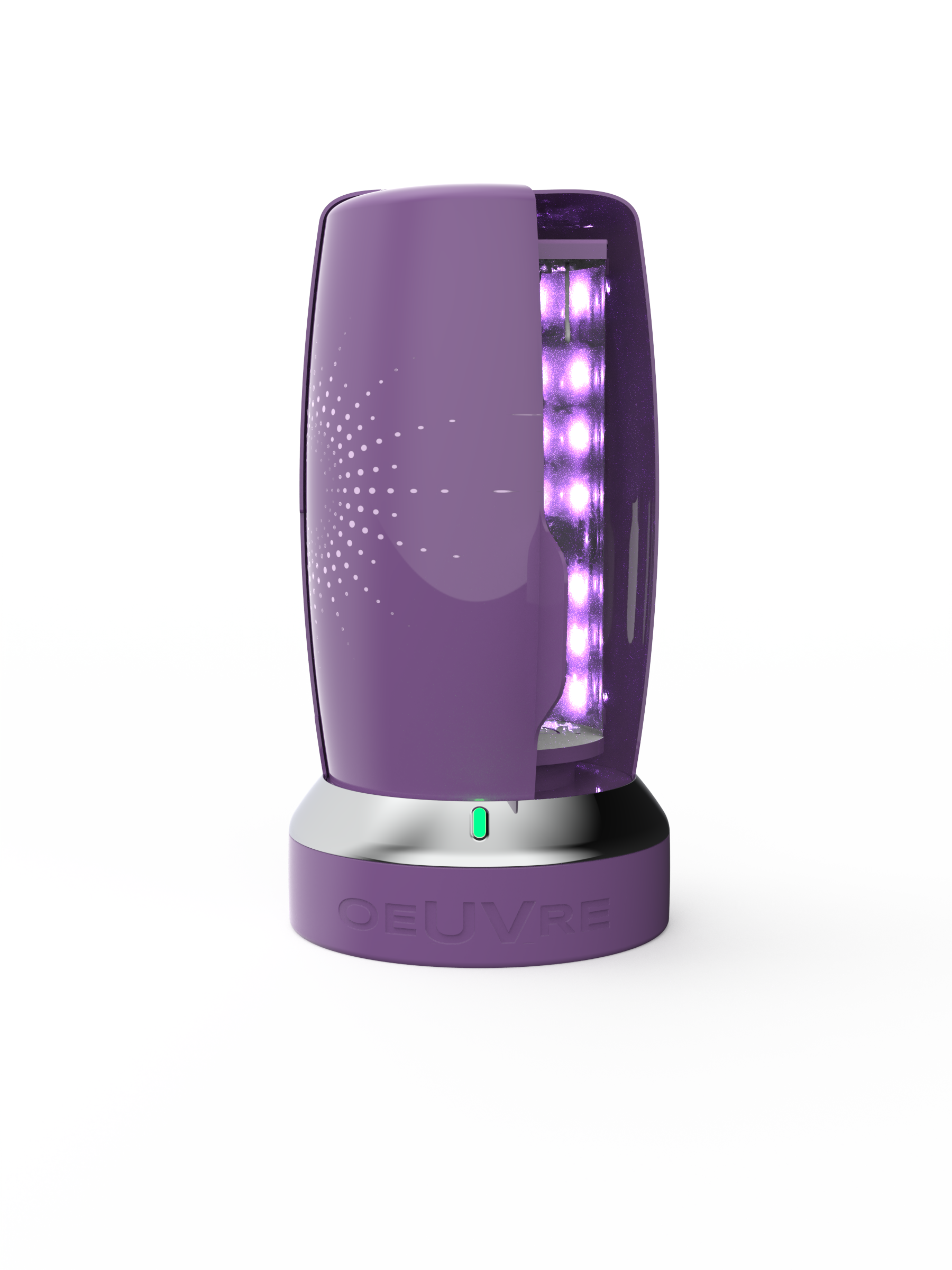
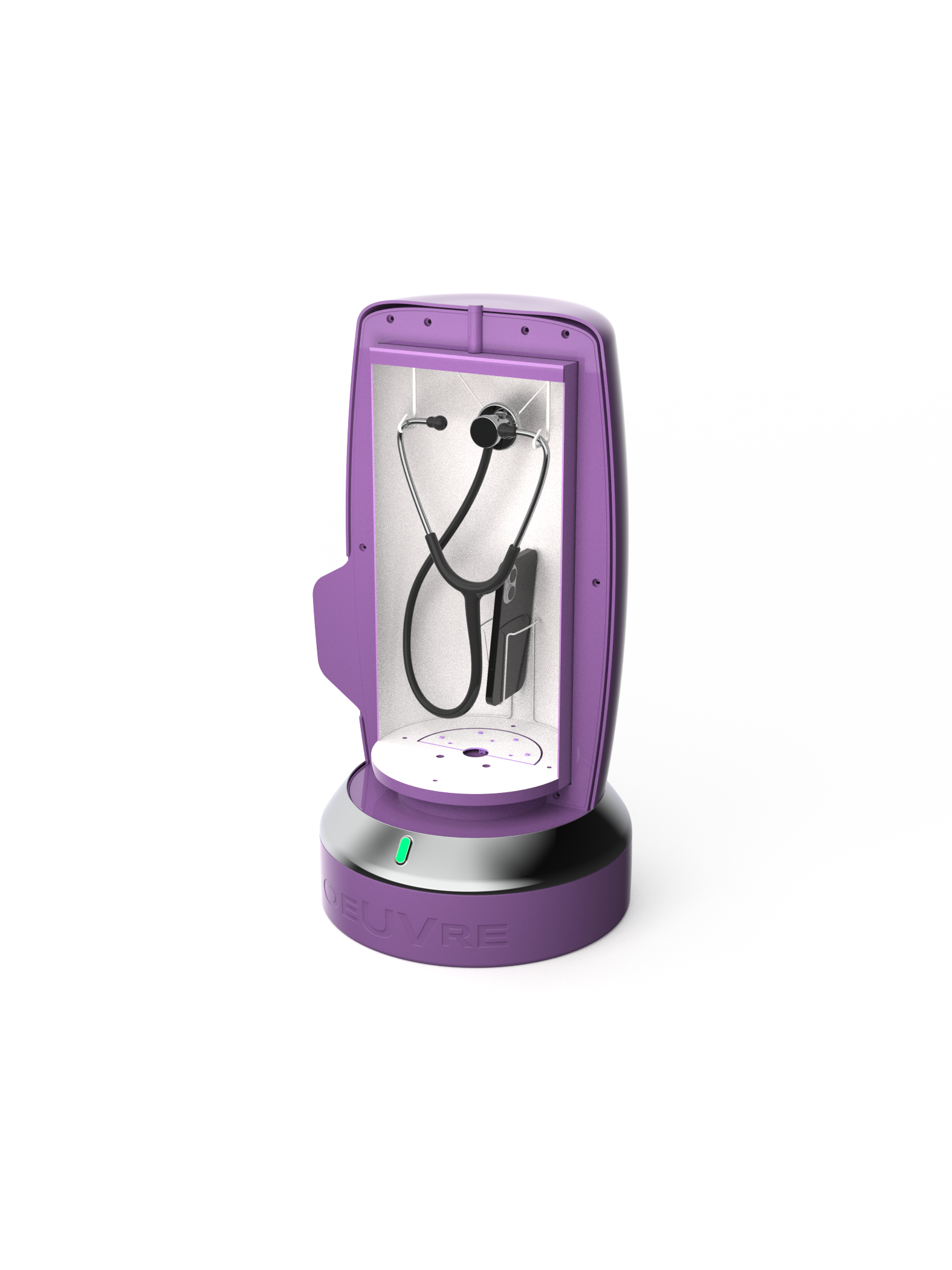
oeUVre is equipped with a cylindrical disinfection chamber that contains 44 precisely positioned UVC light emitting diodes (LEDs), located on the ceiling, floor, and concave rear wall of the disinfection chamber. The disinfection chamber is lined with a highly reflective coating to maximize UVC light dispersion. When the disinfection chamber door is closed, the disinfection cycle is automatically activated, with each LED emitting UVC light within a wavelength range of 260 – 270 nanometers. The chamber contains a single hanger bracket that is designed to position the stethoscope in an optimal standard orientation.
Each OeUVre disinfection chamber contains 44 UVC LEDs positioned on the ceiling, floor, and concave rear wall of the chamber. The chamber is lined with a highly reflective coating designed to maximize UVC light dispersion.³
During the one-minute cycle, the LEDs continually expose the stethoscope to UVC light within a wavelength range of 260–270 nanometers at 750 milliamps. UVC light disrupts microbial DNA and RNA, resulting in cell death.³ ⁶
After inserting the stethoscope into its hanger bracket, the chamber door is closed. When the door is closed, a 60 second disinfection cycle starts automatically, during which the UVC LEDs continually expose the stethoscope at a power of 750 milliamps. UVC light emitted destroys microbial DNA and RNA, resulting in cell death.3 At the conclusion of the one-minute disinfection cycle, a green indicator light alerts the clinician that the door may be opened so that the disinfected stethoscope can be retrieved.
Even though UVC light in the wavelength range of 260-270 nanometers has been shown not to damage human skin and eyes, a built-in safety feature of the disinfector immediately aborts the disinfection cycle by turning off the LEDs in the disinfection chamber if the chamber door is opened before the completion of the one-minute cycle. While the stethoscope is being disinfected, the clinician performs customary hand hygiene and then retrieves the stethoscope from the disinfection chamber. This routine seamlessly synchronizes hand hygiene and stethoscope disinfection.
A SPECIFIC CONTRIBUTION
A Larger Problem Is Addressed One Specific Pathway at a Time.
Infection prevention does not address only the spread of resistance. A prevented infection sits at the intersection of patient health, institutional cost, antibiotic stewardship, and resistance containment.⁵
Problems of this scale do not yield to a single large intervention. They require specific interventions addressing defined mechanisms across the many places where those mechanisms operate.⁵
OeUVre is designed to address one of those specific pathways: the disinfection of an instrument that moves repeatedly between patient encounters.
The Instrument That Has Carried Medicine for Two Centuries Deserves to Be a Little Cleaner Between Patients.
And the people who use it - and the people they care for - deserve the additional protection a clean instrument provides.⁵